Are you sick of mowing your yard repeatedly? Are you looking to eradicate the grass on your lawn? Is there any concern about the grass being killed via mulching? Are you concerned about grass growing through the mulch? All of these notions will be discussed in detail here.
Occasionally, excessive grass and weeds take over the lawn. It obstructs the mulch’s proper functioning. Additionally, unwanted grass extracts nutrients from the soil, depriving the plants of essential nutrients.
Mulching is the simplest and most natural method of eradicating these types of grass. Additionally, grass absorbs a lot of water, and homeowners are eliminating excess grass from their lawns to avoid water shortages.
Does Mulch Kill Grass?
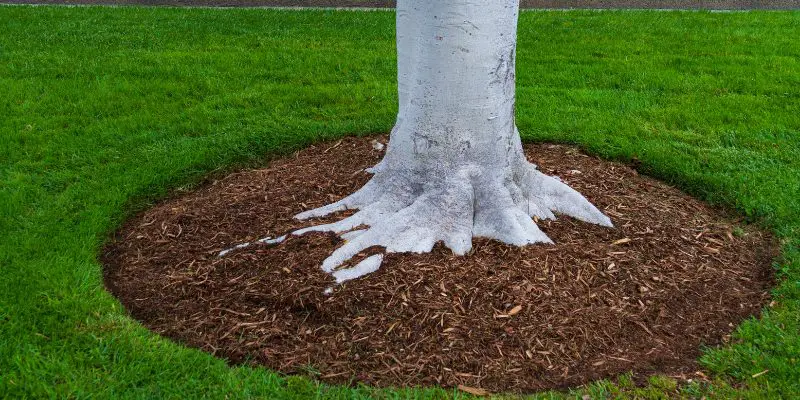
It is a frequently asked question: Will mulch kill the grass?
To address this, we must first grasp the concept of mulch.
Mulch is a layer applied to the lawn for the purpose of increasing its effectiveness and health. Mulch comes in a variety of types, including organic and inorganic mulch.
Organic mulch is obtained from plants and aids in grass development. While inorganic mulch is made from other materials, such as plastic.
Inorganic mulch is used to kill or remove grass. You may add or replace your deteriorating mulch to keep grass from growing.
The best solution is to use inorganic mulch in form of sheets.
Sheet mulching is an inorganic mulching technique that is used to kill the grass.
Grass takes nearly 8-10 months to die. This procedure may be performed at any time of year but must encompass three months of seasonal growth.
On positive side, sheet mulching is beneficial on all types of grass and in all types of environments, whether sunny or shady. A cloth or newspaper can be used for sheet mulching.
When laid over grass, sheet mulch prevents sunlight, air, and moisture from reaching the soil. As a result, the grass is deprived of nutrients. Thus, grass growth is halted. Gradually, the grass begins to degrade and eventually dies completely.
Will Grass Grow Through Mulch?
It is important to mention that mulch functions as a shield, preventing sunlight, air, and water from penetrating the soil. This inhibits the growth of grass and weeds.
Mulch is intended to prevent weeds and grass from growing. However, grass does occasionally sprout on the surface and begins to grow. Several variables contribute to grass’s growth.
Occasionally, mulch is too thin or does not spread evenly across the surface, allowing air, sunlight, and water to permeate.
As a result, grass and weeds begin to grow. Mulch, in this way, supplies nutrients that aid in the growth of grass and weed.
Thus, we can conclude that, given the right conditions, poor mulching, and a favorable environment, grass can grow through mulch. However, if you do proper mulching grass cannot grow under the mulch.
Do I Need to Remove Grass Before Mulching?
The short answer is YES!
Mulching is a cheap way of controlling weeds and creating a healthy and clean look to your grass.
For this reason, it is necessary to eliminate grass before mulching. It assists mulch to perform its function effectively.
If the grass is removed properly, the mulch will remain in its place and prevent weeds to grow. You can forego grass removal if it is less than 3 inches high.
How to Keep Grass From Growing Under Mulch?
It is vital to prevent grass growth beneath the mulch. Mulch mostly inhibits the growth of grass and weeds.
Grass grows in certain circumstances. It may impair the mulch’s effectiveness, necessitating the need to prevent grass from growing beneath the mulch. To do this, we can use different methods as listed below.
1. Use of Cardboard or Newspaper
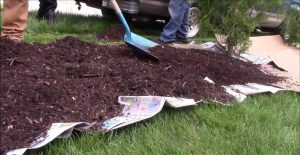
The most effective among them is the use of cardboard or newspaper.
It is an effective and inexpensive method of controlling grass growth. Mulch is created by spreading cardboard or newspaper over the soil’s surface.
This way, grass will naturally degrade and a continuous barrier will be built, preventing the growth of weeds and grass.
Cardboard/newspaper acts as mulch.
By mulching them, a thick double layer is generated that blocks both water and sunlight. Eventually, grass will cease to grow beneath the mulch.
For keeping grass from growing via cardboard mulching, the following materials are required.
Materials Required
- Newspaper
- Cardboard
- Tool for weed pulling
- Mulch
- Lawn mower
The following steps should be followed:
Procedure
- Mow the grass in the section of lawn where you want to inhibit it. You’ll be using newspaper to cover the space, and the paper will lay better over short grass. If your grass is less than 3 inches in length, you can skip this step.
- Remove dandelions and oxalis, which are persistent weeds. Perennial weeds are undesired plants that sprout from the same root year after year. These are robust plants that have the ability to recover once the mulch has degraded.
- Overlay the area with heavy layers of newspaper or cardboard covers. At least ten sheets of newspaper should be used to create the newspaper layers. Overlap the borders by 4 inches to create a more effective barrier against grass.
- Using water, dampen the newspaper or cardboard.
- Distribute the mulch evenly over the newspaper or cardboard. You would like the mulch to be at least four inches thick, preferably six inches, to completely block out light and air. Take care not to rip or displace the cardboard or newspaper. Once the mulch has been laid, re-water the area for compaction of the mulch.
- At least three months should pass before planting in the area. This allows the mulch to accomplish its job of killing the grass and the newspaper or cardboard to decompose. During this time period, you should only water the mulch if strong gusts threaten to sweep it away.
2. Use of Chemical Spray/Vinegar
Grass and weeds can be sprayed with a herbicide to keep them from growing beneath the mulch.
Additionally, vinegar can be sprayed on invading grass. Because vinegar is completely natural, it is affordable and safe to use. It can be used in combination with dish soap. This way, it will have a thick consistency and will adhere to grass and weeds.
This is an effective but not permanent method of eliminating grass and weeds.
3. Defined Edges:
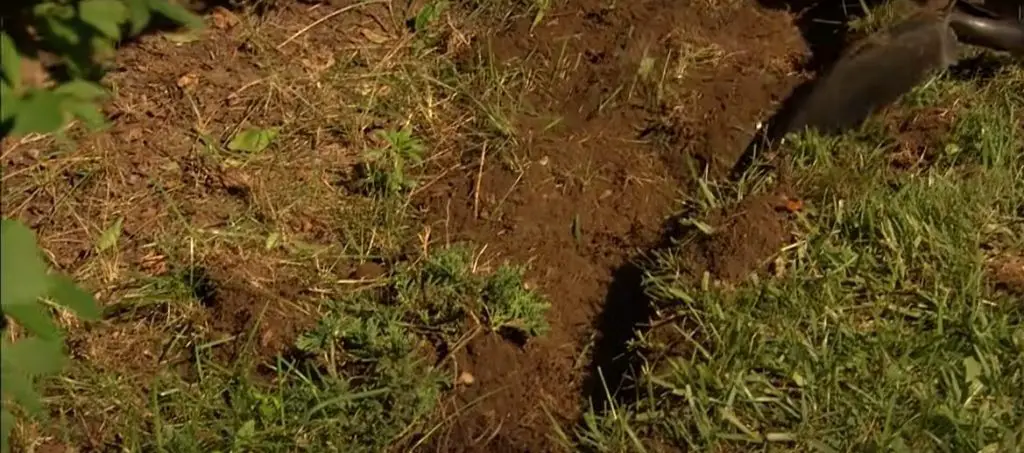
If you have mulched your flowerbed, be sure to edge it. What’s the point of this?
You can prevent grass and weed roots from getting underneath your mulch by edging, particularly by forming a deep edge.
It can be defined by a stone and can prove to be a physical barrier for grass growth.
4. Solarizing Method
You can kill grass and weeds with the sun. It takes six hours of sun a day for six weeks in the summer to kill the grass and weeds. The sun kills the grass and weeds but it doesn’t hurt the earthworms. You can use solarizing to kill weeds and grass before you plant new plants.
It kills the weeds and grass down to a depth of 4 to 12 inches.
It kills weeds, harmful soil microbes, and seeds. It doesn’t hurt beneficial microbes or earthworms.
This method works best on fescue, ryegrass, and bluegrass, with partial success on Bermuda grass.
